Pages

Showing posts with label Chaos Theory. Show all posts

Wednesday, February 12, 2014

Escape Velocity


I have chosen to take some time off to travel and to research and discuss potential solutions for what we are facing. Within a decade we are entering a global crisis, which if not immediately addressed will lead to a situation that humanity is unlikely to recover from. Unpredictable weather patterns and weather fluctuations will affect even major modern cities, which have no technology in place to deal with climate change.

Lack of transportation, unhygienic conditions and resulting illness will make all of us suffer. Even the very wealthy will not be immune to pandemics; viruses and bacteria do not discriminate. In fact, if mankind turns itself into a self-created endangered species, the very poor are the most likely to survive. While this may sound harsh, their immune systems are better equipped to deal with a potential post-civilized world and are already used to using grocery carts as an environmentally friendly mode of transporting their belongings.

Scientists are desperate to talk to each other, come up with new ideas and research for science and humanity´s sake, but are prevented from doing so by international patent and non-disclosure agreements. The primary and immediate solution is to start funding research into new technology without an immediate financial benefit. Like bankers and investors, scientists themselves need to create networks to freely exchange thoughts and ideas across geographic and disciplinary boundaries.

If there was any colonized or terraformed planet available I would move, but I am stuck on this beloved pale blue dot and cannot climb into a comfy spaceship to reach the escape velocity required to overcome the gravitational pull of mankind´s irresponsibility and self-destruction.

We are facing a sisyphean struggle, but at least I hope to count myself among those who tried to make this world a more livable place.

Saturday, June 8, 2013

Science: 400 ppm And I Blame Star Trek


By Justin Bilicki

"Could you kindly rephrase that in equivocal, inaccurate, vague, self-serving and roundabout terms that we can all understand?"

Certainly.

Science, Technology, Creation and Innovation are our future. I learned that watching Star Trek. Science will let us live longer and eventually better. Science will help us cope with inevitable climate chaos ("change" is for wimps).

If those in power and of influence fund it. Power. I have spent too much time with those that suffer from the illusion of power. I knew that when I joined a global cause a few years ago that we were fighting a losing battle. Groups of us have formed across fields and continents, desperate to share our knowledge with each other.

Fellow geeks who share with child-like abandon. Look what I found! Cool, it's a rock. I found a tadpole. Hey, look at this everyone, the sun is doing something neat right now. Whooooaaa.

Oligopolies do not share with the other children.

We presented. Talked. TED talked. Presentations. Travel. Meetings. Talking. With people who do not understand a single concept and believe that accelerating graphs of over 300 ppm mean that the economy is doing well. During one particularly bored meeting and chronic interruptions by mobile technology, I walked out in the middle of my own presentation. Futile.

I went on hikes, cleared my head and decided that this was not worth my time. It felt right. There was no point explaining to anyone that the earth will be fine, new species will replace us. Nature reclaims.

I watched movies with HQ and the kittehs. Tried to read or paint. Tuned out the floods and the suffering that will follow. Tried to play video games. Thought about video games.

Then 400 ppm came. Still there. Faster than anyone calculated.

Thought about Homo Sapiens and Star Trek and Inception.

We have been treading water, time to learn how to swim again.


Monday, December 26, 2011

2011: Small Good Things

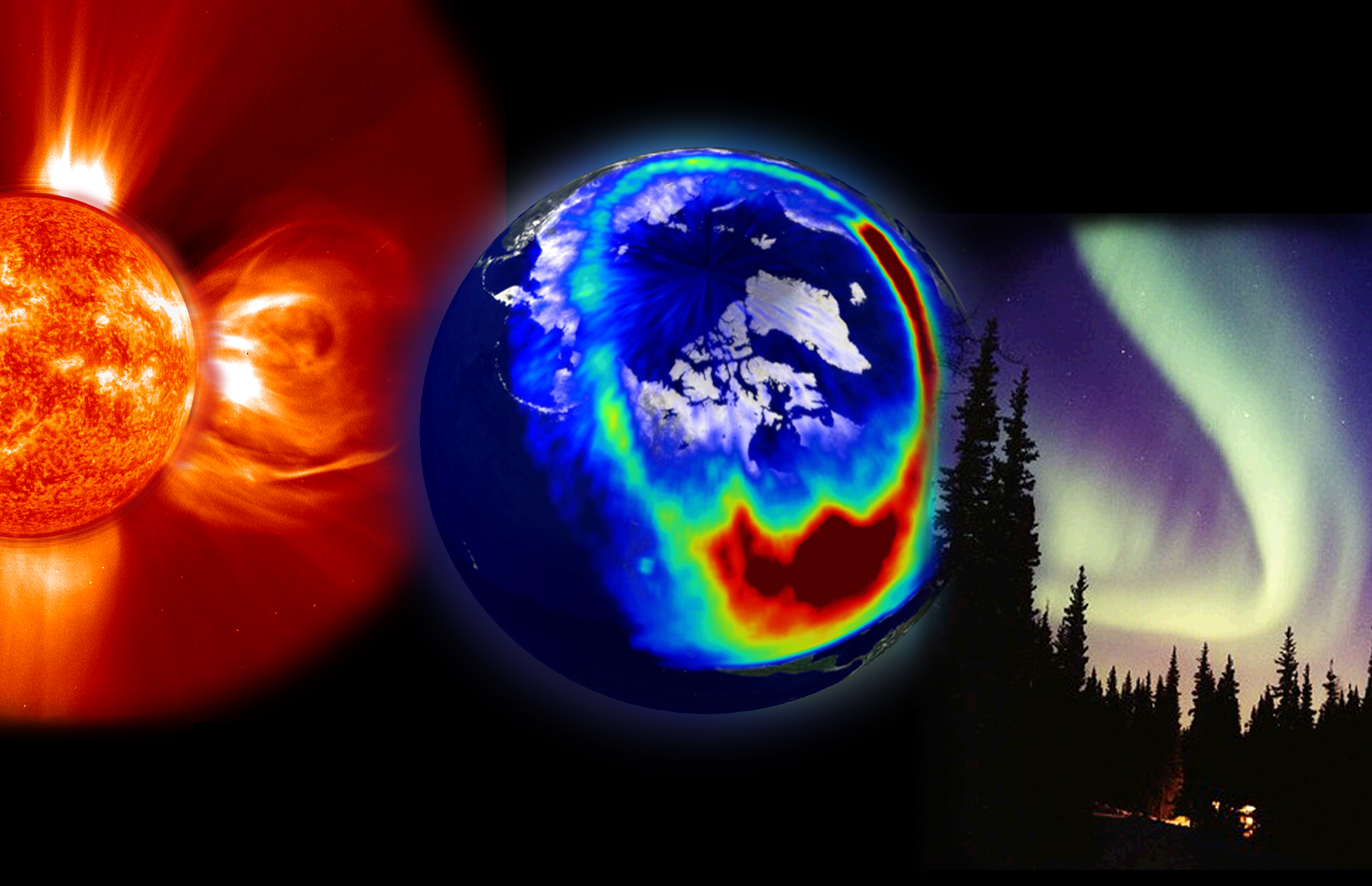
Southern Lights (Aurora Australis) by Astronaut Ron Garan


The human mind has a tendency to focus on the negative things that have happened to us. Memories of traumatic events are more deeply formed than the positive ones. Science blames the hippocampus for ensuring that we recall bad events. An adaptive mechanism to prevent these events from reoccurring in the future. One dwells and reviews images of a poorly edited movie, which rely on perception provoked by negative emotions rather than factual memories.

The positive events are mundane in comparison. We take repetitive stability for granted. The human mind does not think about "it could be worse", but is dissatisfied that "it could be better" and is not. Such is the human condition.

I attended a series of mind-opening and -altering lectures, during which a gifted professor introduced me to the concept that the quantum path not taken might be the alternate path we would not want to be on. In simple terms; the bad things that did not happen to us.  If we were to keep track of them, we would quickly realize just how fortunate we are.  He listed a few examples and I was inspired to do the same.

It helps that I am a compulsive list maker and keep a (somewhat sporadic) writing journal. Writing a Proustian list of aggravating and disappointing events is easy. Writing a list of the pleasant moments takes a little effort; the "small stuff" is so easily forgotten.

The 2011 list of random small good things:

1. I started a blog. Glad that I did.
2. I met some incredible people in the blogosphere and am impressed by the quality of writing. I have come to think of many of you as my geographically challenged "friends", although I still think it is strange that I am communicating with people whom I have never met. I am working on that.
3.Then again, I had a fascinating conversation about art and science with a complete stranger in an art gallery.
4. I bought art supplies, books and journals.
5. I bought other things, but this list is not about "stuff".
6. Nothing unreasonably heavy fell on me.
7. Nothing unreasonably large ran me over.
8. Someone I was not particularly fond of has retired.
9. Spawn is taking his medication and I still have all of my digits.
10. Sharing hilarious moments with HQ, my friends and select relatives.
11. Had an argument with someone about a scientific theory when he walked into a mailbox, which I used to prove my point. And it was not "Hrunmpf!" Still laughing.
12. Living with a circus troupe of feline entertainers.
13. Finding lost treasures while organizing.
14. Finding pebbles, leaves and interesting things while hiking.
15. Watching birds and other wildlife.
16. Watched a group of fat squirrels put on weight for the winter, this amuses me on an annual basis.
17. Learning something new.

The list is long. Life is short.

Wednesday, April 20, 2011

Talking About February in April And Solar Cycles In 2011

As some of you may have noticed, there was a time "meme" going around back in February. As always, I look for the reason behind a pattern.  For those of us who experience the four seasons and particularly winter, February is often a time of contemplation and pondering. Unsurprisingly, I noticed it in posts and blogs.

There may be a simple explanation, an instinctual genetic memory that this is a time of hibernation, when the elements are not conducive to spending too much time in the great outdoors, when natural sunlight is less available and the Vitamin D it produces is reduced.  Less natural energy, more time indoors.

Unlike our ancestors, modern civilization expects us to ignore Father Winter, does not allow us to naturally slow down a little, take the time to allow ourselves to engage in creative projects indoors. Use up the stores we have created in the fall. Instead we are asked to continue "hunting and gathering", force our natural rhythms into hyperdrive.

So far 2011 has brought more natural disasters, tragedy and significant world changing events. As a blogging community we responded with pensiveness and humor that has not come out of hibernation yet.


Is Space Weather to blame?

For the last few years the weather has been "unusually active", from floods to tornadoes to snow in regions where it is not normally experienced. In some parts of the northern hemisphere, spring has forgotten to make an appearance this year. Climatologists claim it was the worst spring in 50 years. An active solar cycle, El Nino/La Nina, climate change, oceanic currents are all contributing factors to the recent "unusual" weather patterns witnessed or experienced around the globe. Globally, we have seen an "unusually" active cold and flu season.

The effects of living on a spinning planet hurtling through space held on its yearly course solely by the gravitational pull of our sun have been felt. Ever-changing, a chaotic dynamic equilibrium in a constant state of flux and change. Nature's way, from shifting tectonic plates to space weather.

More contemplation than theory, I wonder how celestial events influence human behavior. There are species and ecosystems on this planet whose rise and fall in population correlate with the 11 year sunspot cycle. Sol is in a very active phase at the moment.  Is there any correlation between that and the recent revolutions we have witnessed in some parts of the world?  Is Sol's activity the causative factor for some of the recent natural disasters? How is everything interconnected?

I'm "unusually" contemplative for the month of April.

Wednesday, February 2, 2011

Gaia's Revenge?


The media calls it the worst storm of the "Century".
Which makes me wonder: How would they know?

As the world is being pounded by our atmosphere's greatest hits, (coming soon to a geographic location near you), one is reassured by the confidence of our meteorologists' predictions.


Taking all variables into consideration, weather psychics forecasters have recently announced that the climate over the next 89 years will be better than "worst".

Now. If only those pesky butterflies could stop flapping their wings.